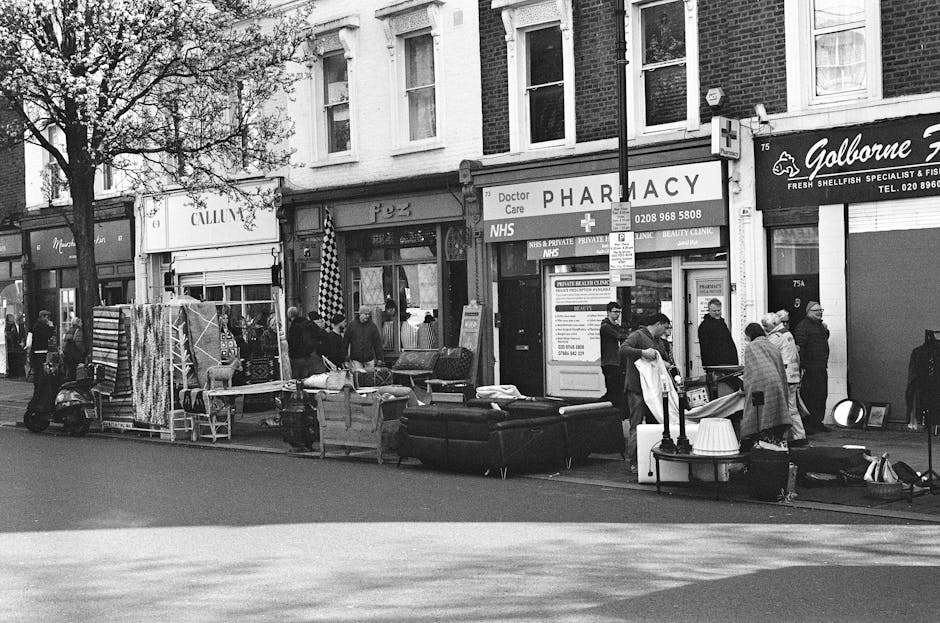
Wallington High Street small shop removals success guide
If you are planning a move for a small shop on or around Wallington High Street, you already know it is not the same as moving a home. There are tighter time windows, customers drifting past the window at the worst possible moment, stock that cannot be left in a heap, and that nagging worry about access, parking, and "how on earth do we get the fridge cabinet out without blocking the pavement?" This Wallington High Street small shop removals success guide is here to make the whole thing feel manageable. It covers what the move involves, how to plan it properly, where the common traps are, and how to keep trading disruption as low as possible. Truth be told, a good shop move is less about brute force and more about timing, coordination, and a few sensible decisions made early.
Whether you are shifting a boutique, cafe, barbershop, convenience store, or tiny office-retail hybrid, the same rule usually applies: the smoother the preparation, the less stressful the moving day. And yes, there is a way to do this without turning the street into a scene from a hurried Saturday clear-out.
Table of Contents
- Why Wallington High Street small shop removals success guide Matters
- How Wallington High Street small shop removals success guide Works
- Key Benefits and Practical Advantages
- Who This Is For and When It Makes Sense
- Step-by-Step Guidance
- Expert Tips for Better Results
- Common Mistakes to Avoid
- Tools, Resources and Recommendations
- Law, Compliance, Standards, or Best Practice
- Options, Methods, or Comparison Table
- Case Study or Real-World Example
- Practical Checklist
- Conclusion
- Frequently Asked Questions
Why Wallington High Street small shop removals success guide Matters
Small shop removals are often underestimated because the footprint looks modest. One till counter, a few display units, some stock, maybe a back-room fridge, and that is that. Except it rarely is. Shops on a busy high street tend to sit inside a web of access constraints, trading pressures, neighbouring businesses, delivery timings, and customer expectations. A move that looks simple on paper can quickly become awkward if you have not planned for loading space, fragile items, shutdown timing, or the order in which everything comes off the premises.
Wallington High Street has the added reality of being a live retail environment rather than a quiet industrial estate. That changes the whole feel of the operation. You may need to work around traffic, pedestrians, trading hours, and the everyday choreography of high-street life. A removals plan that works beautifully for a warehouse can fall flat here. That is why a purpose-built approach matters.
A good guide matters for another reason too: small shop owners are usually wearing six hats at once. You are thinking about stock control, customer communication, staff rotas, landlords, keys, utilities, and probably the next month's cash flow as well. Having a clear removals structure cuts through the noise. It gives you a sequence. And when the day comes, sequence is everything.
Practical summary: small shop moves succeed when access, timing, packing, and communication are planned together, not left as separate jobs. Miss one piece and the rest gets harder very quickly.
How Wallington High Street small shop removals success guide Works
The process is usually straightforward once you break it down. You assess the site, list what is moving, decide what must be done before closing, and then stage the removals so the heaviest or most awkward items are dealt with first. In real terms, that often means doing the move in layers rather than treating everything as one giant task.
Here is the basic flow most small shop owners follow:
- Site review: check entrances, steps, tight corners, lift access if relevant, parking, loading distance, and any fragile flooring or glass fronts.
- Inventory and sorting: separate stock, fixtures, decor, back-office items, equipment, and rubbish or recycling.
- Scheduling: choose a move date that reduces disruption, such as after hours, early morning, or a quiet trading period.
- Packing and labelling: pack by zone or function so you can reopen faster at the destination.
- Loading and transport: move in a planned order so awkward items do not block faster-moving boxes.
- Unload and position: place key items where they will be used first, not just wherever there is room.
That sounds obvious, I know. But the number of shop moves slowed down by a missing label, an unclear floor plan, or a van parked too far away is honestly still a bit ridiculous. The work is not just physical. It is logistical.
For many local business owners, a service like commercial moves is the most relevant fit because it is designed around trading spaces rather than domestic routines. If the shop is also moving equipment that needs extra care, you may also want to think about packing and unpacking services so you are not trying to do everything yourself at the eleventh hour.
Key Benefits and Practical Advantages
The main benefit of a well-run shop removal is simple: less downtime. Every hour a small shop is closed can mean lost sales, missed footfall, and a lot of pressure when reopening. But the advantages go beyond speed.
- Better stock protection: organised packing reduces breakages, spillages, and lost items.
- Less staff stress: your team knows what to do instead of improvising under pressure.
- Cleaner reopening: items arrive in a usable order, which makes the new site feel operational much sooner.
- Reduced disruption to neighbours: careful loading and timing help avoid awkwardness with nearby businesses.
- Lower risk of damage: commercial equipment and display fixtures tend to be expensive to replace, even when they look ordinary.
There is also a subtle but important benefit: confidence. When the plan is solid, people behave differently. Staff stop panicking. Suppliers answer questions more clearly. You can make decisions without that low-level background dread that sometimes follows a messy move. Small thing, but it matters.
If you are comparing service levels, it can help to read around options such as removal services and man and van support to see which setup suits the size and complexity of your shop. A tiny move may only need a light-touch arrangement. A busier retail unit with stock and fittings usually needs more structure.
Who This Is For and When It Makes Sense
This guide is for owners, managers, landlords, and even staff members who are helping coordinate a small commercial move. It is especially useful if you are running a shop where the space is tight and the operation depends on a fast turnaround.
It usually makes sense when you are:
- moving to another unit on or near Wallington High Street
- refitting and needing to clear the shop temporarily
- closing one site and reopening another nearby
- relocating stock, fixtures, or back-office equipment
- combining storage, delivery, and removal work in one plan
It also helps if your business has a mix of delicate and bulky items. Think display shelving, tills, folded stock, refrigeration, mirrors, branding boards, small furniture, or odd-shaped equipment. These things do not move themselves, obviously, and they rarely fit neatly into a one-box-fits-all approach.
If your move is mainly furniture or shop fittings, related pages like furniture removals and furniture pick up may be useful for understanding how individual items can be handled. If you are only moving a few items and want a leaner solution, man with van or man with a van services can suit smaller, more flexible jobs.
Not every shop needs the same level of support. A kiosk-style unit and a busy mini-market are different worlds. One is a sprint, the other is a carefully choreographed shuffle. The trick is being honest about which one you are.
Step-by-Step Guidance
1. Start with a blunt inventory
Write down everything that is moving. Not just the obvious bits. Include small stock, stationery, cleaning products, cables, payment terminals, signage, spare bulbs, packaging materials, and anything stored in cupboards. Shops often accumulate "invisible" items in drawers and under counters. Those forgotten bits turn into the annoying stuff on moving day.
2. Measure the awkward items
Measure anything tall, wide, heavy, fragile, or awkwardly shaped. Door widths matter. Stair corners matter. So do ceiling lights, low beams, narrow corridors, and the angle of the turn from the shop floor to the pavement. A few centimetres can be the difference between a clean move and a minor headache.
3. Decide what must be ready first at the new site
Do you need the till area, card machine, stock shelves, and signage up before anything else? If yes, pack those items separately and label them clearly. The first hour after arrival often sets the tone for the whole reopen. When the essentials are easy to find, everything calms down.
4. Plan the timing around trade
In a high-street setting, timing can make or break the move. Early starts, after-hours access, or quieter weekdays may all help. If your trade is seasonal or footfall-sensitive, choose the window carefully. A move in the middle of a busy retail spell can feel like trying to repaint a room while people are still sitting in it. Not ideal.
5. Protect stock and equipment properly
Use suitable packing materials, not just whatever boxes are lying around. Fragile items need padding. Liquids need sealing. Electronics need cable separation. Hanging items may need garment handling. If you have chilled or temperature-sensitive goods, think carefully about timing and transfer methods. It is not just about lifting things; it is about preserving them.
6. Organise loading and unloading order
Load in the order you want things to come out. That sounds simple, but it saves time later. Put essential items near the rear for fast unloading, and heavy items so they are stable. At the destination, place items into zones: front-of-house, stockroom, office, and waste/recycling. This avoids the classic "everything in one pile" problem.
7. Finish with a quick operational check
Before you hand over the old unit or open the new one, check that keys, documents, mobile chargers, payment devices, and cleaning supplies are in the right place. People often forget the boring stuff. Then they need it immediately. Of course they do.
Expert Tips for Better Results
There are a few things experienced movers and shop owners tend to do that make a surprising difference.
- Label by function, not just by room. For a shop, "till area," "window display," "back stock," and "office" are often better labels than generic box numbers.
- Keep one "first-hour" kit. Include scissors, tape, a charger, cleaner, marker pens, a basic toolkit, and any key paperwork.
- Photograph the old setup. A quick set of pictures helps recreate shelves, signage, and counter layouts later. Handy when memory gets fuzzy, which it often does after a long day.
- Strip shelves in a sensible order. Remove lighter items first, then fixtures. It is cleaner and safer than ripping everything down in a rush.
- Protect the public-facing side. If the move involves the shopfront, plan how to keep the entrance safe and tidy during loading.
A small but smart move is to line up any disposal or recycling separately. If you are clearing old furniture, damaged fixtures, or surplus stock, it can help to think about recycling and sustainability early, especially if you want to avoid last-minute clutter at the new unit.
And here is a slightly unglamorous truth: one of the best "expert tips" is simply not overfilling boxes. Heavy retail stock in flimsy packaging is a classic moving-day complaint. It always looks manageable right up until the bottom gives way. Funny, in a grim sort of way.
Common Mistakes to Avoid
Most shop move problems are preventable. The issue is usually not bad luck; it is vague planning.
Leaving access checks too late
Many businesses sort out packing before they ever confirm vehicle access, loading distance, or timing restrictions. Then the van arrives and nobody is quite sure where it should stop. A short access walk-through can save a lot of trouble.
Ignoring the difference between stock and fixtures
Stock can often be boxed. Fixtures need dismantling, padding, and sometimes tools. Treating them the same leads to damage or delays.
Not assigning responsibility
Someone needs to be in charge of labels, someone else in charge of keys, and someone else in charge of final checks. If everyone is responsible, nobody is.
Forgetting the customer-facing side
Shop signage, social media updates, opening hours, and temporary notices matter more than people think. Even regular customers get confused if they arrive to find a dark unit and no explanation.
Trying to save money in the wrong places
It is fair to want a sensible budget. But cutting corners on packing, timing, or insurance awareness can cost more later. That is the awkward arithmetic of moving.
If you want to compare quotations more carefully, the article on comparing Wallington man and van quotes is a practical companion piece. For wider pricing context, SM6 removals cost and booking tips and real cost of Wallington removals are worth a read if you are trying to budget without guesswork.
Tools, Resources and Recommendations
You do not need a mountain of specialist kit, but the right basics help more than you might expect. For a small shop removal, the most useful tools usually include strong boxes, tape, marker pens, furniture blankets, straps, a trolley or sack truck, protective wrap, and a simple toolkit for dismantling shelves or counters.
Useful planning resources often include:
- a room-by-room or zone-by-zone inventory sheet
- a floor plan for the new site
- labels in different colours for front-of-house, stock, office, and storage
- a contact list for the landlord, staff, movers, and suppliers
- a short reopening checklist for the first day in the new unit
If you are moving heavier or awkward items, this matters even more. A back-friendly, damage-aware approach saves stress. For example, a small shop with a display freezer may need a different strategy from a greeting card shop with mostly light stock. If there is furniture involved, furniture removals support can keep the process orderly, and if storage is needed between units, storage may be the safer bridge than rushing everything in one go.
One practical recommendation: do not pack the "open-first" items at the bottom of a pile because they are small. Put them in a clearly marked bag or box and keep them separate. That tiny decision saves twenty minutes of rummaging and a fair bit of irritation later.
Law, Compliance, Standards, or Best Practice
For any shop move, you should take compliance and safety seriously, even if the job is small. UK requirements can vary depending on the building, the items being moved, and how the work is carried out, so it is wise to treat this as a best-practice area rather than assuming one-size-fits-all rules.
At a practical level, the main points are usually:
- Health and safety: manual handling should be planned to reduce injury risk. Heavy lifting, twisting, and carrying awkward items down stairs should not be improvised.
- Insurance awareness: check that the mover's insurance and your own cover fit the type of goods and access conditions involved.
- Building and access rules: lease terms, landlord permissions, and loading restrictions may affect when and how the move can happen.
- Fire and electrical safety: appliances, cables, and stored goods should be handled sensibly, especially if anything is being disconnected or recommissioned.
- Waste handling: dispose of unwanted fixtures and packaging responsibly rather than assuming everything can go in one skip or bag.
It is also sensible to read a provider's own policies before booking. Pages such as health and safety policy, insurance and safety, and terms and conditions can help you understand what standards and responsibilities are expected. If payment arrangements are part of your decision, payment and security is a sensible page to review as well.
Best practice here is not about ticking boxes for the sake of it. It is about reducing avoidable risk. If something can be boxed, labelled, and carried by two people instead of one, that is usually the smarter move. Simple as that.
Options, Methods, or Comparison Table
There is more than one way to handle a small shop removal. The right method depends on size, timing, and how much of the work you want to do yourself. Here is a clear comparison to help with decision-making.
| Method | Best for | Advantages | Trade-offs |
|---|---|---|---|
| Do-it-yourself with hired vehicle | Very small moves, minimal stock, low complexity | Can be cheaper upfront, full control | More physical effort, higher risk of delays or damage, harder to coordinate |
| Man and van support | Compact shops, lighter fixtures, short local moves | Flexible, quick, often ideal for simple layouts | May be less suitable for larger or more complex commercial relocations |
| Commercial removals service | Shops with stock, equipment, and tighter timing needs | Better planning, handling, and coordination | Usually a more involved service, so it needs clearer booking details |
| Split move with storage | Fit-outs, phased reopenings, uncertain timelines | Reduces pressure and allows staged transfer | Requires extra planning and possibly extra cost |
In real life, the "best" option is not always the cheapest one. It is the option that gets the shop reopened cleanly, without damage, and without the owner losing half a day chasing missing cables. That last part is more common than people admit.
Case Study or Real-World Example
Picture a small independent gift shop on Wallington High Street. Nothing huge. A narrow front area, a compact stockroom, a till counter, a few glass display units, and shelves filled with mixed stock. The owner wants to move to a slightly better-positioned unit nearby. Sounds manageable. But then the practical questions start arriving all at once: when can the van stop, how do the display cabinets come out, what happens to fragile stock, and how do we reopen quickly enough not to lose momentum?
The successful version of that move usually looks something like this. The owner starts with a full inventory and marks the most fragile items first. Display units are emptied and wrapped ahead of time. Stock is packed by category and labelled for the new layout. The move is scheduled for a quieter window, and the essentials needed to trade again - card machine, branded signage, opening stock, till equipment - are kept together in a separate set of boxes. The old site is cleared methodically, not in a panic. The new shop opens with enough structure that staff can actually find what they need.
What made the difference was not speed alone. It was sequencing. The move did not rely on one heroic burst of energy. It relied on small decisions made beforehand. And that is usually the real story behind a smooth small-shop relocation.
In cases like this, a broader local service set can be helpful, especially if the job combines stock, shelving, and a few bulky pieces. Pages such as office removals and office relocation services can also be useful if the shop includes a back-office function or admin area that needs moving with care.
Practical Checklist
Use this checklist as a simple last-pass before moving day. It is not fancy, but it works.
- Confirm the move date, arrival time, and access route.
- Check parking, loading space, and any restrictions in advance.
- Complete a full inventory of stock, fixtures, and equipment.
- Separate fragile items, electricals, liquids, and heavy objects.
- Label boxes by function and destination zone.
- Photograph shelving, counters, and display layouts before dismantling.
- Prepare tools, tape, markers, and a first-hour essentials kit.
- Notify staff, landlord, suppliers, and key customers if needed.
- Set aside rubbish, recycling, and items for disposal.
- Check insurance, safety, and any contractual requirements.
- Keep keys, documents, chargers, and payment equipment together.
- Do a final walkthrough of both old and new sites.
If you want a cleaner, less chaotic move, this checklist is the bit you come back to when the day starts getting noisy. Which it will. There is always a moment when the tape goes missing or somebody asks where the receipt book is. Always.
Conclusion
A successful Wallington High Street small shop move is rarely about luck. It comes down to clear planning, practical packing, smart timing, and a realistic understanding of how high-street access actually works. If you treat it like a commercial operation rather than a quick favour to yourself, the move becomes much easier to control.
The good news? A small shop move is absolutely manageable when the process is broken into sensible stages. Start with the inventory, think hard about access, protect the items that matter, and keep the reopening in mind while you pack. That is the real shortcut. Not rushing. Planning.
If you are comparing help, costs, or service options, a little research goes a long way. And if you want to keep the move smooth from the first box to the final sign going back up, working with the right support can make the whole thing feel a lot less heavy.
Get a free quote today and see how much you can save.
Sometimes the best move is the one that feels calm by the time the shutters go back up.
Frequently Asked Questions
What is the main goal of a Wallington High Street small shop removals success guide?
The main goal is to help you move a small shop with minimal disruption, less damage risk, and better control over timing, access, and reopening. It turns a stressful task into a manageable plan.
How early should I start planning a small shop move?
Ideally, start as soon as the move becomes likely. Even a compact shop benefits from early planning because access, packaging, landlord checks, and stock sorting all take longer than people expect.
Do I need a commercial removals service for a very small shop?
Not always. A very small move may be fine with a man and van style arrangement, especially if the stock and fixtures are light. If you have heavier equipment, tighter timing, or more complex access, a commercial service is usually safer.
How do I reduce downtime during the move?
Pack essentials separately, choose a quieter moving window, label everything clearly, and set up the new space in the order you need it to function. The less time spent searching for basics, the quicker you reopen.
What should I move first from a small shop?
Start with non-essential stock, decorative items, and anything that can be boxed early. Keep the operational essentials - till equipment, keys, paperwork, chargers, and first-day stock - together and easy to reach.
Is parking and access really that important for shop removals?
Yes, very. On a busy high street, poor access planning can slow the whole job down and increase the chance of damage or delays. A short walk-through of the loading point is worth its weight in gold.
How do I protect fragile stock and display items?
Use proper padding, sturdy boxes, and clear labels. Pack fragile items so they cannot shift around in transit, and keep glass, electronics, and delicate decor separate from heavier goods.
What should I do with unwanted fixtures or old stock?
Decide early whether items will be reused, sold, recycled, stored, or disposed of. Leaving this until moving day creates clutter and slows down the process. A tidy exit makes the new start much easier.
How can I compare removal quotes properly?
Compare what is actually included: access help, packing, loading time, equipment, insurance awareness, and any extra handling. The cheapest quote is not always the best value if it leaves key work out of the service.
What if my shop move needs storage in between?
Short-term storage can be a useful bridge if the new unit is not ready or if the move needs to happen in stages. It is often better to stage the process than to cram everything into one stressful day.
Are there safety or compliance issues I should think about?
Yes. Manual handling, insurance, landlord permissions, access rules, electrical safety, and waste handling are all worth checking. Best practice is to keep the move safe, documented, and properly planned.
What is the biggest mistake people make with small shop removals?
Underestimating the details. A small shop can look simple, but access, packing order, and reopening needs can become messy fast. The people who do best are the ones who plan the boring parts well. Boring, maybe. Effective, definitely.