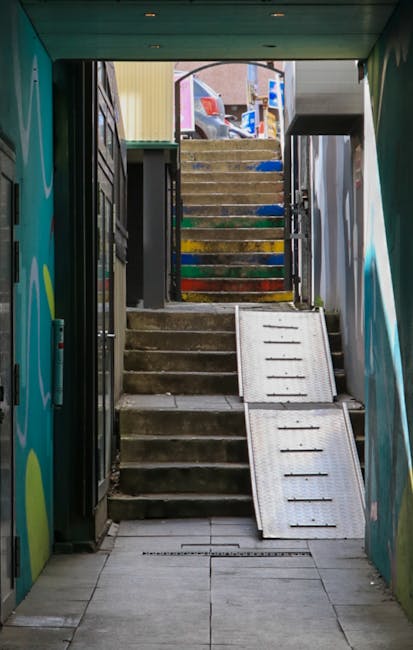
Stair and narrow access solutions for Wallington removals
Anyone who has ever tried to move a sofa up a tight staircase knows the feeling: the turn is awkward, the landing is narrower than it looked, and suddenly the whole day is running on angles, timing, and patience. Stair and narrow access solutions for Wallington removals are about making that exact situation manageable, safe, and far less stressful. Whether you live in a top-floor flat, a converted house with a narrow hallway, or a property where the front path is just not built for bulky furniture, the right approach can save time, reduce damage, and keep everyone calmer.
This guide explains how narrow-access moving actually works, what to check before moving day, and which practical options are worth considering. It also covers common mistakes, useful preparation steps, and the kind of best practice that experienced movers rely on when spaces are tight and the margins for error are tiny. Let's face it: stairs do not forgive guesswork.
Table of contents
- Why stair and narrow access matters
- How the process works
- Key benefits and practical advantages
- Who needs this and when it makes sense
- Step-by-step guidance
- Expert tips for better results
- Common mistakes to avoid
- Tools, resources and recommendations
- Law, compliance, standards and best practice
- Options and comparison table
- Case study example
- Practical checklist
- Conclusion
- Frequently asked questions
Table of Contents
- Table of contents
- Why Stair and narrow access solutions for Wallington removals Matters
- How Stair and narrow access solutions for Wallington removals Works
- Key Benefits and Practical Advantages
- Who This Is For and When It Makes Sense
- Step-by-Step Guidance
- Expert Tips for Better Results
- Common Mistakes to Avoid
- Tools, Resources and Recommendations
- Law, Compliance, Standards and Best Practice
- Options, Methods, or Comparison Table
- Case Study or Real-World Example
- Practical Checklist
- Conclusion
- Frequently Asked Questions
Why Stair and narrow access solutions for Wallington removals Matters
Narrow staircases, tight hallways, split-level layouts, basement flats, loft conversions, and awkward internal turns are common in real homes. In Wallington, as in much of South London, properties can vary a lot in age and layout, which means one move might be straightforward while the next feels like a puzzle with sharp corners. If access is not planned properly, even a simple job can turn into a slow, physical slog.
What makes this more than a convenience issue is the knock-on effect. Poor access planning can lead to scratched walls, strained backs, broken packaging, delayed timings, and frustration for everyone involved. It can also affect which items can be moved safely and whether a larger vehicle is even the right choice. This is why experienced movers treat access as a core part of the job rather than a side note.
If your move involves a full property, you may also want to look at related services such as house removals, flat removals, or a flexible man and van option. For business moves, office removals and commercial moves are worth considering too, especially if access is limited to certain loading times.
Practical takeaway: if the path from front door to vehicle looks awkward, assume the same will be true for furniture unless proven otherwise. Measure first, move second.
How Stair and narrow access solutions for Wallington removals Works
The process is much simpler when you break it into stages. First comes access assessment. That means checking stair width, ceiling height, handrails, turns, landings, door clearance, lift size if relevant, and the route from the property to the vehicle. In some homes, the real issue is not the staircase itself but the space at the bottom or top where an item must be rotated.
Next comes item planning. Large wardrobes, sofas, mattresses, white goods, bookcases, exercise equipment, and pianos can all behave differently when you try to move them through a narrow route. Some items simply need to be turned upright, dismantled, wrapped more carefully, or moved using a different route altogether. That is why a good plan often starts with the biggest and most difficult item first.
Then there is route protection. Floors, bannisters, walls, and door frames may need covering before anything heavy starts moving. This is not overcaution; it is basic damage prevention. On a busy day, one loose corner can mark a wall in seconds. You know how it goes - everyone is focused on the sofa, and then the skirting board gets the blame.
Finally, the move itself is managed with the right lifting method, team positioning, and pacing. In tight access work, slow is often safer than fast. That does not mean inefficient. It means controlled, deliberate, and less likely to end in a wobble at the worst possible moment.
What narrow access often means in practice
- Stairs with an awkward bend or narrow landing
- Top-floor flats with no lift
- Basement or lower-ground properties with tight entry points
- Terraced homes with compact internal hallways
- Shared entrances where space is limited by other residents or property features
Key Benefits and Practical Advantages
The obvious benefit is that your belongings are moved more safely. But the practical value goes beyond that. A proper access solution helps reduce stress, keeps the move on schedule, and makes it easier to choose the right vehicle and crew size. It can also prevent expensive misjudgements, like arriving with a vehicle that is too large for local access or finding out too late that a wardrobe cannot make the stair turn.
There is another useful advantage: better access planning often makes the whole moving day feel more organised. When everyone knows the route, the fragile items, and the sequence of loading, the job becomes calmer. That matters more than people expect. A calm move is usually a cleaner move.
For some customers, the best outcome is simply avoiding a failed attempt. If an item will not fit safely, there is no shame in changing the method. It may mean dismantling furniture, moving items in smaller sections, using temporary storage, or choosing a different service mix. A little flexibility now often prevents a much bigger headache later.
| Benefit | What it means on moving day | Why it matters |
|---|---|---|
| Less damage risk | Walls, bannisters, and furniture are protected | Reduces repair costs and avoidable stress |
| Better time control | Safer route planning prevents delays | Keeps the move more predictable |
| Smarter vehicle choice | The right van or truck is booked for the access conditions | Prevents wasted trips or parking issues |
| Less physical strain | Items are handled with suitable equipment and technique | Helps reduce lifting injuries and fatigue |
Who This Is For and When It Makes Sense
Narrow access moving solutions are useful for a lot more people than you might think. They are especially relevant if you live in a flat, a maisonette, a converted property, or a house with an unusually tight staircase. They also make sense for anyone moving bulky furniture, delicate items, or heavier pieces that need more than a standard lift-and-carry approach.
Students moving into upper-floor accommodation, couples relocating from older terraces, landlords clearing a rental property, and small businesses shifting furniture through shared entrances all face similar access headaches. Even a short move can become complicated if the building design works against you.
If you are comparing service types, it can help to think about the overall move as well as the access issue. For smaller jobs, a flexible man with van arrangement may be enough. For larger or heavier loads, a dedicated removal van or even a larger moving truck may be more suitable. The point is not size for its own sake; it is matching the vehicle to the property.
It also makes sense if you have a single difficult item, such as a piano, that needs careful handling through a tight route. In those cases, specialist support from piano removals can be a better fit than trying to improvise on the day.
Step-by-Step Guidance
Here is the simplest way to tackle stair and narrow access removals without turning the day into guesswork.
- Measure the access properly. Check stair width, landing depth, doorway clearance, ceiling height, and any sharp turns. Measure the widest point of your largest item as well. Don't rely on memory; it is surprising how often "it should fit" is wrong.
- Identify the awkward items early. Sofas, wardrobes, beds, desks, and appliances are often the troublemakers. Make a list before move day so the team can plan the route and the order of loading.
- Decide what can be dismantled. A bed frame, wardrobe, shelving unit, or table may be safer to move in parts. The trick is to do this before time pressure kicks in.
- Protect the route. Use covers for floors, door edges, and bannisters where needed. If the route is tight, even light contact can leave marks.
- Choose the right vehicle and crew. The route to the vehicle matters as much as the staircase. If parking is limited or the access is awkward, smaller loads and more careful planning can be more effective than forcing a larger vehicle into the job.
- Load in the right order. Put the most difficult items in first, but only after the route is clear. Keep essentials accessible so you are not hunting for kettle boxes at the end of a long day.
- Review and adjust. If the staircase turns out to be tighter than expected, pause and change the method. That is not failure; that is good moving judgement.
If you are packing in advance, good boxing makes a bigger difference than many people expect. A sensible setup using packing and boxes or a more hands-on packing and unpacking service can make the difference between a tidy carry and a wobbly one. Heavy, overfilled boxes on stairs are no one's friend.
Expert Tips for Better Results
Experience teaches a few small lessons that save a lot of hassle. First, measure the route at more than one point. A staircase can feel wide at the bottom and suddenly pinch at the turn. Second, think about angles, not just dimensions. Sometimes a sofa will fit if it is rotated early, but not if you wait until the landing. Timing matters. A lot.
Third, keep communication simple on the day. One person should call the pace and route changes. Too many voices in a tight stairwell can become confusing very quickly, and nobody wants that kind of soundtrack echoing through the house.
Fourth, if you are moving from or into a flat, talk openly about the access before booking. Services such as flat removals are often the best fit when stair access is a known challenge. Likewise, if the move is residential and the stairs are the main issue, home moves or house removalists can provide a better overall approach than treating the property like a standard easy-access job.
Fifth, do not leave clearing the stairwell until the final minute. Coat hooks, hallway shoes, bins, mirrors, and random side tables somehow all appear in the path when you are carrying something large. Strange, really.
Common Mistakes to Avoid
One common mistake is underestimating how much space an item needs to turn. People often measure the width of the door and stop there, but the real challenge may be the angle required to bring the item through. Another mistake is forgetting that bannisters and light fittings can obstruct the route even when the staircase itself looks passable.
Another issue is poor packing. Bulky, loose, or badly sealed boxes are harder to stack, harder to grip, and more likely to split on stairs. Heavy books in weak boxes, for example, are a recipe for awkwardness. So are plastic bags stuffed with random bits and pieces. They swing. They snag. They annoy everybody.
People also sometimes book the wrong type of service for the access conditions. A generic move may be fine for an open driveway and a ground-floor property, but narrow stair access needs more careful planning. If your move has time pressure or a same-day need, an option like same day removals can still work, but only if the access details are clear from the start.
Finally, do not ignore the vehicle side of the equation. If parking is tight outside your building, a smaller, more manoeuvrable setup may be better than a larger vehicle that struggles to stop safely. The right choice is often the one that fits the street, not just the items.
Tools, Resources and Recommendations
You do not need a van full of specialist kit for every move, but a few tools make a big difference. Furniture blankets, straps, gloves with grip, corner protectors, plastic wrapping for soft items, and simple measuring tools all help. In narrow stair moves, these basics often matter more than anything flashy.
For mixed household moves, a sensible combination of removal services and a suitable vehicle can keep things practical. If you are clearing items you do not need, furniture removals or even furniture pick up may be useful, especially when one or two awkward pieces are the main problem rather than a whole house.
For storage-heavy situations, such as a delay between moving out and moving in, storage can take pressure off the staircase altogether. That is especially helpful if you need to split the move into stages, or if large items are simply too awkward to move safely in one go.
If you are managing a business relocation or office clearance, it is worth reviewing office relocation services and office removals alongside access planning. Office furniture can be deceptively bulky, and tight staircases have a habit of exposing every design flaw in a desk or cabinet.
Law, Compliance, Standards and Best Practice
For moving work in the UK, the most relevant principle is simple: the people doing the lifting should work safely, and the job should be planned to reduce avoidable risk. In practical terms, that means following sensible manual handling practices, using suitable equipment, and avoiding unrealistic loads or rushed lifting. The exact approach depends on the property, the items, and the team involved.
It is also normal good practice to make clear arrangements around insurance, access conditions, and any limitations before the move begins. If a staircase is unusually narrow or a route is clearly unsafe for a particular item, the right decision may be to change the method rather than push ahead. That is not being overcautious. It is being professional.
Where customers are comparing providers, it helps to look for clear policies on safety, insurance, and complaints handling. Pages such as health and safety policy, insurance and safety, and terms and conditions are useful references because they show how the business handles practical risk and service expectations. If you want to understand how a company treats customer data and payments too, payment and security and privacy policy are worth a quick read.
For companies with stronger ethical and environmental expectations, it can also be reassuring to review recycling and sustainability and the business background on about us. Those pages do not move the sofa for you, obviously, but they do tell you something about how the business thinks.
Options, Methods, or Comparison Table
There is more than one way to solve a narrow-access move. The best choice depends on the item size, floor level, parking conditions, and whether the move is a single item or a full property clearance.
| Method | Best for | Pros | Limitations |
|---|---|---|---|
| Dismantling furniture | Wardrobes, beds, shelving, desks | Improves fit and reduces strain | Needs time, tools, and careful reassembly |
| Smaller vehicle and tighter planning | Street access issues, urban loading, small to medium loads | Easier parking and loading control | May require more trips |
| Full-service removal approach | Households with multiple bulky items | Better coordination and route management | Usually more involved to organise |
| Storage between moves | Staged relocations and timing gaps | Removes pressure from move day | Requires extra planning |
In practice, the best solution is often a mix. A bed may be dismantled, a sofa wrapped and carried by a two-person team, and one or two smaller items moved separately. That combination is normal, not a workaround. A good move adapts to the property rather than trying to force the property to behave.
Case Study or Real-World Example
Picture a typical Wallington scenario: a two-bedroom flat on the upper floor of a converted house, with a narrow internal staircase and a tight landing turn. The customer needs to move a wardrobe, a sofa, several boxes, a bed frame, and a washing machine. The front access is fine, but the stairwell is the real challenge.
On a move like this, the most useful first step is not lifting. It is checking what can be dismantled and what needs extra protection. The wardrobe doors may come off, the bed frame may be separated, and the sofa may need to be carried in a slightly different orientation. The washing machine is usually handled last, once the route is clear and the lifting plan is settled.
The move becomes smoother because the awkward pieces were identified early. The team avoids trying to force an item through the turn three times in a row, which is where damage often starts. The customer, meanwhile, gets a calmer day and fewer surprises. That matters. People remember whether the process felt controlled.
In jobs like this, a slightly slower start often leads to a better finish by lunchtime. There's a bit of rhythm to it once the route is understood. First the difficult item. Then the easier boxes. Then the final sweep of the hallway, which always looks bigger after everything else is gone.
Practical Checklist
Use this checklist before moving day. It is simple, but it catches a lot of the usual problems.
- Measure the staircase, landings, and key doorways
- Check the width and height of your largest items
- Identify anything that should be dismantled
- Clear the stairwell, hallway, and entrance route
- Protect floors, bannisters, and door frames where needed
- Confirm parking and loading access
- Pack boxes evenly and avoid overfilling them
- Separate essentials so they are easy to reach
- Tell the mover about any tight turns, low ceilings, or restrictions
- Keep phone numbers handy in case the route needs adjusting
Quick tip: take a few photos of the staircase and entrance. They can be surprisingly helpful when describing the access to a removal team. A picture often says more than a long explanation typed in a rush.
Get a free quote today and see how much you can save.
Conclusion
Stair and narrow access solutions for Wallington removals are really about one thing: turning a difficult layout into a workable plan. Once you know the route, the item sizes, and the safe method, the move becomes much less intimidating. That is true whether you are clearing a flat, shifting a family home, moving an office, or just trying to get one very awkward sofa through one very stubborn landing.
The best results usually come from honest preparation, sensible packing, and choosing the right kind of support for the access conditions. Nothing fancy. Just careful planning, steady hands, and a bit of local know-how. And when all is said and done, that makes a bigger difference than people expect.
If your move includes stairs, tight corners, or limited access, the smartest next step is to plan the route properly and book the right help before the day feels rushed. A good move should feel controlled, not chaotic - and that bit of calm is worth a lot.
Frequently Asked Questions
What counts as narrow access in a removal?
Narrow access usually means any route where normal carrying is harder than expected: tight staircases, small landings, low ceilings, narrow doorways, or awkward turns. The exact issue is not just width; it is the full path from the room to the vehicle.
Do I need to measure my stairs before booking a move?
Yes, if you can. Measurements help avoid surprises and make it easier to choose the right method, vehicle, and crew. Even rough measurements are better than guessing.
Can a sofa usually fit up a narrow staircase?
Sometimes yes, sometimes no. It depends on the sofa size, the stair angle, the landing space, and whether it can be turned or carried upright safely. Sofas are one of the most common items that look simple until you reach the turn.
Should I dismantle furniture before a narrow-access move?
If the item can be safely dismantled, usually yes. Beds, wardrobes, tables, and shelving often move better in parts. Just keep screws, fittings, and small pieces in labelled bags so reassembly is not a guessing game later.
Is a smaller van better for stair and narrow access jobs?
Not always, but often it helps when parking or street access is tight. The right vehicle depends on the amount of furniture, the loading space, and how easy it is to stop near the property. Bigger is not automatically better.
What should I do if my building has no lift?
Tell the mover early and be specific about the floor level and staircase condition. No-lift moves are common, but they need more planning and sometimes extra time or extra hands.
How do movers protect walls and bannisters on stairs?
They may use covers, padding, blankets, and careful handling techniques to reduce contact and scuffing. The main aim is to avoid hard corners and friction at the tightest points of the route.
Can narrow-access removals be done on the same day?
They can, in some cases, if the job is straightforward and the access details are clear. For tighter jobs, though, same-day timing can be a bit risky if you have not measured or prepared properly.
What items are hardest to move on stairs?
Large wardrobes, sofas, mattresses, appliances, and anything heavy but awkward to grip are usually the trickiest. Pianos and large glass items need especially careful handling.
How can I make moving day easier in a flat with narrow stairs?
Clear the route, pack boxes properly, measure key openings, and be ready to dismantle larger pieces. If your move is from a flat, reviewing flat removals can also help you choose a service that suits the layout.
What if my item will not fit safely no matter what?
Then the best answer is usually to change the method rather than force it. That may mean dismantling, using storage, moving the item separately, or choosing a different route. Forcing it is where damage and delays start.
How do I know whether I need full removal services or just a man and van?
If you have a small load and access is manageable, a flexible man and van or man with van arrangement may be enough. If the property is difficult, the items are bulky, or the move needs more coordination, broader removal services may be the better fit.
Where can I check a company's safety and policy details?
Look for pages such as health and safety policy and insurance and safety. They can give you a clearer sense of how the business handles risk, responsibility, and customer protection.
Will storage help if the stairs are too difficult on moving day?
Yes, sometimes it does. If the timing is awkward or a few items need to be moved separately, storage can take pressure off the day and let you move in stages rather than all at once.
How far in advance should I plan a narrow-access removal?
Ideally as early as possible, especially if you are moving a full household or any large furniture. A little lead time makes it much easier to measure, prepare, and avoid last-minute strain. The calmest moves are usually the ones that were planned before the first box was taped shut.